
THE ROOFERS WHO CALL YOU BACK
Winter roof prep and ice dams in St. Louis
St. Louis winters aren't long, but they swing. A few inches of snow, a sunny afternoon, then a hard freeze that night. That cycle is what causes ice dams, and it's hard on flashing, gutters and flat roofs. Fall is the best time to find the weak spots, while the roof is dry and easy to walk.
Request a free inspection Call (314) 244-3799
Leave us a message anytime.
What an ice dam is
An ice dam is a ridge of ice along the lower edge of a roof. Heat from the house warms the upper roof, snow melts there, and the water runs down to the colder eave, where it freezes again. Each cycle makes the ridge bigger. Water backs up behind it, works under shingles, and shows up as a stain on a ceiling or a wet spot at the top of an exterior wall.
Ice dams usually point to a problem in the attic, not the shingles: heat escaping through thin insulation, gaps around lights and attic hatches, or ventilation that doesn't move enough air. Removing the ice treats the symptom. Fixing the attic and the roof edge treats the cause.
What to check before the first freeze
- Gutters and downspouts. Clear leaves so meltwater has somewhere to go. Make sure gutters are fastened tight and pitched toward the downspouts, and that downspouts empty away from the foundation.
- Flashing. Check where the roof meets a wall, a chimney or a skylight. Lifted or rusted flashing is a common winter leak.
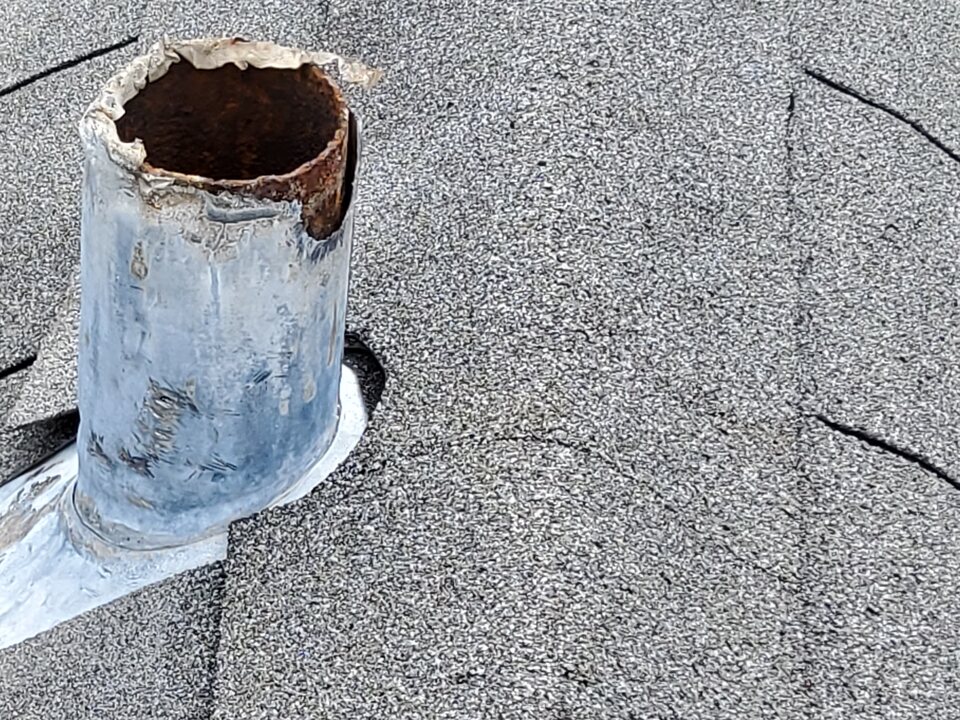
- Pipe boots and vents. Rubber boots crack with age and sun. A cracked boot lets meltwater straight into the attic.
- Shingles at the eaves and valleys. Missing, curled or cracked shingles along the lower edge are where backed-up water gets in first.
- The attic. On a cold, clear morning, look for frost on the underside of the roof deck or damp insulation. Both mean warm, moist air is reaching the roof.
You can see a lot of this from the ground with binoculars. Leave anything that needs a ladder on an icy roof to a roofer.
Flat and low-slope roofs in winter
On commercial buildings, churches and flat-roofed additions, the trouble usually comes from water that has nowhere to go. Snow melts and refreezes around clogged drains and scuppers, ponding water finds every open seam, and freeze-thaw cycles pull at old patches. Before winter, clear drains, scuppers and gutters, and check seams and flashing at walls and rooftop units. If a leak keeps coming back in the same spot, infrared imaging can show where wet insulation is hiding under the membrane.
How we inspect a roof before winter
We look at a roof four ways: a roofer on the roof wherever it can be walked safely, drone photography for roofs that can't be, infrared imaging for moisture, and satellite measurements before we arrive. Then we go through what we found with you, photos included, and give you a written, itemized estimate for anything that needs work. If the roof is fine, we tell you that too.
Repairs come with a written labor and workmanship warranty: 3 months on repairs and 5 years on full replacements, siding and gutter jobs.
Frequently asked questions
- Should I chip ice dams off my roof?
- No. Hammering or chipping at ice damages shingles and gutters, and climbing an icy roof is dangerous. If water is coming inside, keep it contained and get the roof looked at. The lasting fix is usually at the roof edge and in the attic.
- Do heat cables stop ice dams?
- They can keep a channel open at the eave, but they don't fix heat escaping into the attic. We'd look at insulation and ventilation first.
- Is it too late to fix my roof once it's cold?
- Not usually. Many repairs, like boots, flashing and individual shingles, can be done on mild winter days. Some work needs warmer temperatures to seal properly, and we'll tell you if yours should wait.
- I found a ceiling stain after a thaw. Is it an ice dam or a leak?
- It could be either. A stain near an exterior wall after a melt points to an ice dam. A stain in the middle of a room more often means a boot, flashing or a damaged spot. An inspection with photos settles it.
- Do you handle commercial and flat roofs?
- Yes: TPO, EPDM, coatings, metal and modified bitumen. Scopes are written per building.
Get your roof checked before winter
Tell us what's going on with your roof, and we'll inspect it and walk you through what we find. Call (314) 244-3799. Leave us a message anytime. We're the roofers who call you back.